


When the World Feels Uncertain: How Environment Shapes Children’s Emotional Development
April 19, 2026

“You cannot force a tree to grow by pulling its branches, but you can nurture it by tending to the environment it grows in.”


Children’s environments play a powerful role in shaping their development, particularly in early life. From a young age, children learn about the world through the communities around them and the experiences they have within them. Their surroundings, such as their home, school, and wider social environment can provide the context in which they begin to understand relationships, safety, and how to respond to the world.


Early experiences within these environments can significantly influence a child’s emotional, social, and psychological development. Positive, stable, and nurturing environments tend to support healthy development, while unpredictable or stressful environments may contribute to feelings of uncertainty or anxiety.


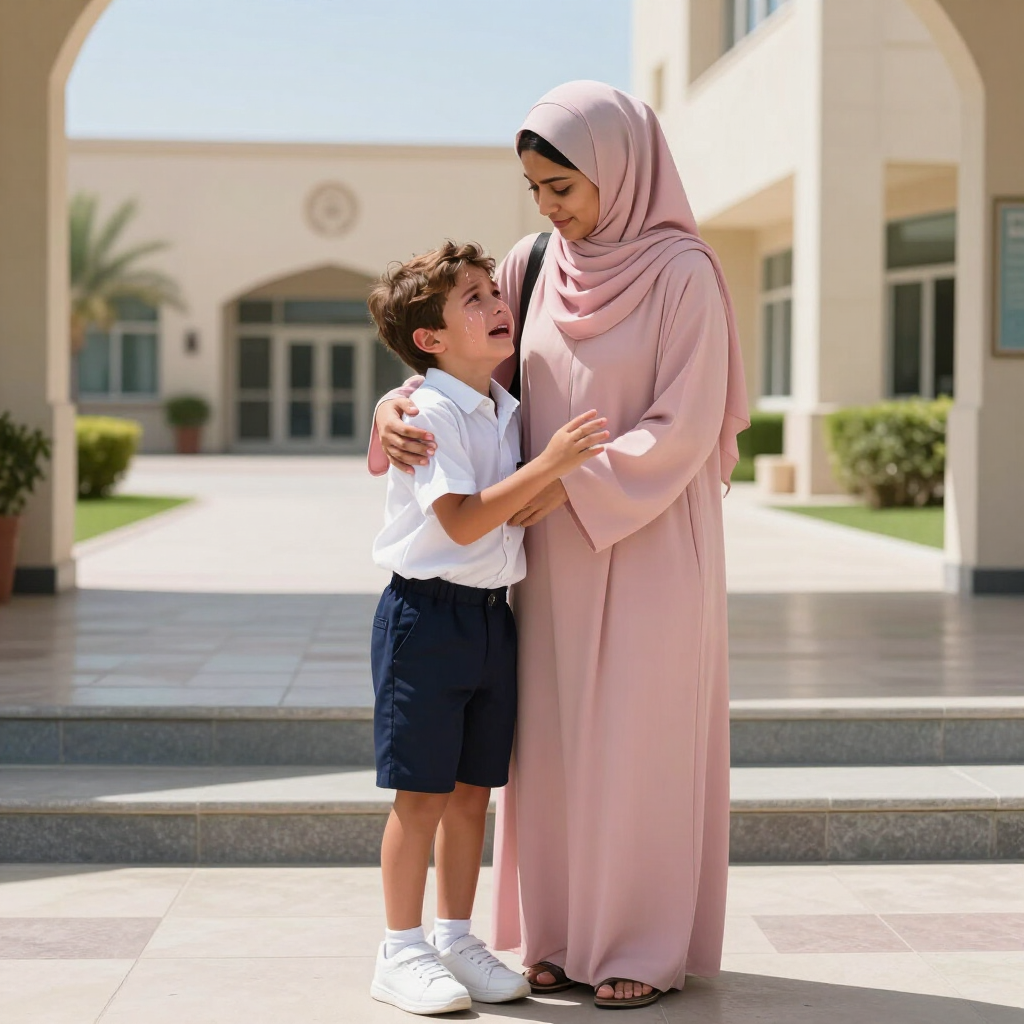
This becomes especially important during uncertain or challenging times. Children are highly observant and often look to the adults in their lives for cues on how to interpret and respond to situations. As Stephen Porges (2011) said, children are actively scanning their environments for safety and or danger. The way adults manage stress, express emotions, and communicate during difficult moments can shape a child’s sense of safety and security. When adults respond with calmness, reassurance, and consistency, children are more likely to feel safe. In contrast, heightened stress or unpredictability in the environment may lead children to feel unsettled or unsure.


When children express their feelings and worries verbally, it is important that they feel heard and understood. However, young children, or those who find verbal communication difficult, often express themselves through externalising behaviours. These behaviours may appear undesirable, such as crying or tantrums, but they are a form of communication and self-expression. The safer a child feels emotionally with an adult, the more able they are to express themselves, knowing they will be met with Furthermore, the adults in a child’s life play a key role in providing emotional safety, regulation, and calm. During uncertain times, this becomes even more important, as children rely on adults as co-regulators. Understandably, adults may also feel the pressure of stress, conflict, or unpredictability. In these moments, such as when a sudden loud bang is heard, children will instinctively observe the adult’s response, looking to their body language and facial expressions for cues of safety.


Overall, the environment is not merely a foundation for development; it actively shapes how children understand themselves, others, and the world around them, as well as how emotionally secure and safe they feel.


At PTC, we take a relational and systemic approach to supporting children, recognising that a child’s emotional wellbeing cannot be understood in isolation. We consider the wider network of relationships, including family, school, and environment, and how these systems interact to shape the child’s experiences.


If you need support during these times reach out to us for child and adolescent psychotherapy in Dubai and UAE.


+971 507834705

hello@playtherapycentre.ae


References


Aghaziarati, A., & Nejatifar, S. (2023). Emotional Development and Regulation in Children: A Review of Recent Advances. KMAN Counselling and Psychology Nexus, 1(1), 118-125.


Alimah, N1,Gandini, S2,Fauziyah, N3 (2023). THE INFLUENCE OF THE ENVIRONMENT ON THE SOCIAL EMOTIONAL DEVELOPMENT OF EARLY CHILDREN. Muhammadiyah Surakarta university.


Porges, S. W. (2011) The polyvagal theory: Neurophysiological foundations of emotions, attachment, communication, and self-regulation. W. W. Norton & Company.
Contact us
children with autism play therapybdubau
April 25, 2025
supporting children with autism through play therapy in the uae
By Stella Antoniou April 4, 2025
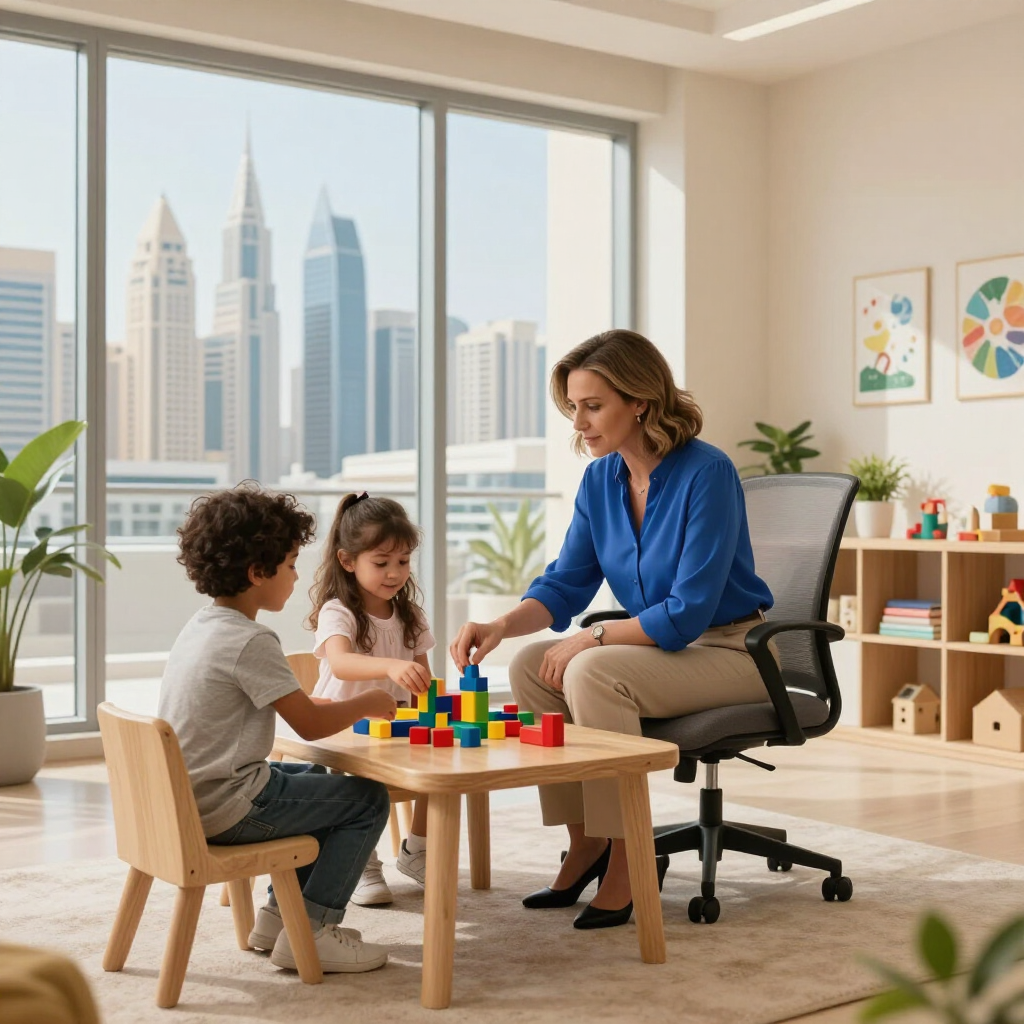
by Stella Antoniou, Accredited Play Therapist Throughout my years of working with children, I’ve observed that a significant number of them are referred for anxiety-related concerns. It’s unfortunate to see young minds carrying such burdens at such a sensitive age. Is it the increased awareness, the availability of resources, or perhaps the changing nature of our world? Are our expectations of children now higher than before? Regardless of the reason, my main goal has always been to ease these symptoms by offering a listening ear and providing a safe space where children can process their experiences. What’s it like to be anxious at this age Children often come to the play therapy room with physical symptoms like stomach-aches, headaches, or trouble sleeping, sometimes accompanied by nightmares. Others may become mute, stop eating well, struggle with social interactions, or experience difficulties at school. Being a child in the UAE, and particularly an expat child, comes with its own unique challenges, frequent transitions, cultural adaptation, and a sense of displacement. While the Dubai offers an opportunity to connect with various cultures, this can also be overwhelming for children. Moving between countries or homes can make them feel as though they lack a solid sense of belonging. How can Play Therapy help Play is a child’s natural way of communicating. It is their language, a way to express emotions and experiences in a developmentally appropriate manner. Play Therapy is a highly relational form of therapy that hinges on the therapeutic relationship the therapist builds with the child. An experienced Play and child therapist is able to make insightful reflections, guiding the child toward self-awareness and self-help. Through the power of Play Therapy, children can express their anxieties in creative ways: shaping their feelings with clay, telling their stories through art, navigating relationships in a dollhouse, uncovering hidden fears in a sandtray, or finding comfort and escape in a teepee tent. Each modality offers a unique pathway for self-discovery and emotional growth, empowering children to work through their challenges at their own pace. Do I "teach" strategies? While strategies can be helpful for soothing symptoms temporarily, the goal is to resolve the underlying trauma. In Play Therapy sessions, I may discuss coping strategies with my clients as needed, but the focus remains on addressing the root causes of their anxiety and helping them develop long-term resilience. An evidence based approach Play Therapy isn’t just a therapeutic approach, it’s one grounded in evidence. Research consistently shows that Play Therapy is highly effective in reducing anxiety in children. For example, Hateli (2021) found that non-directive play therapy significantly lowered anxiety levels in children diagnosed with anxiety disorders. But the benefits go beyond just easing anxiety. A comprehensive review by Nursanaa and Ady (2020) found that Play Therapy not only reduces anxiety but also strengthens emotional regulation, improves social skills, and boosts academic performance. Play Therapy’s impact extends to a variety of settings. Davidson, Sathya, and Venkatesan (2017) discovered that Play Therapy eased anxiety in hospitalized children, underscoring its effectiveness across different contexts. As we look at child therapy trends in the UAE, should we be rethinking our approach to therapy for children? Could Play Therapy be the key to helping them heal in a way that feels natural and empowering? References Hateli, B. (2021). The effect of non-directive play therapy on reduction of anxiety disorders in young children . https://doi.org/10.1002/capr.12420 Nursanaa, W. O., & Ady, I. N. C. (2020). Play Therapy for Children with Anxiety Disorders . Proceedings of the 5th ASEAN Conference on Psychology, Counselling, and Humanities. https://doi.org/10.2991/assehr.k.200120.018 Davidson, B., Sathya, N. S., & Venkatesan, L. (2017). Effectiveness of Play Therapy upon Anxiety among Hospitalised Children . International Journal of Advance Research, Ideas and Innovations in Technology, 3(5), 441.